Floors
How to Remove Floor Grime Without Damaging Your Floors
Learn how to remove floor grime safely from tile, vinyl, hardwood and more — with practical steps that protect finishes and leave floors genuinely clean.
By Broom Hilda's Cleaning Service · · 7 min read
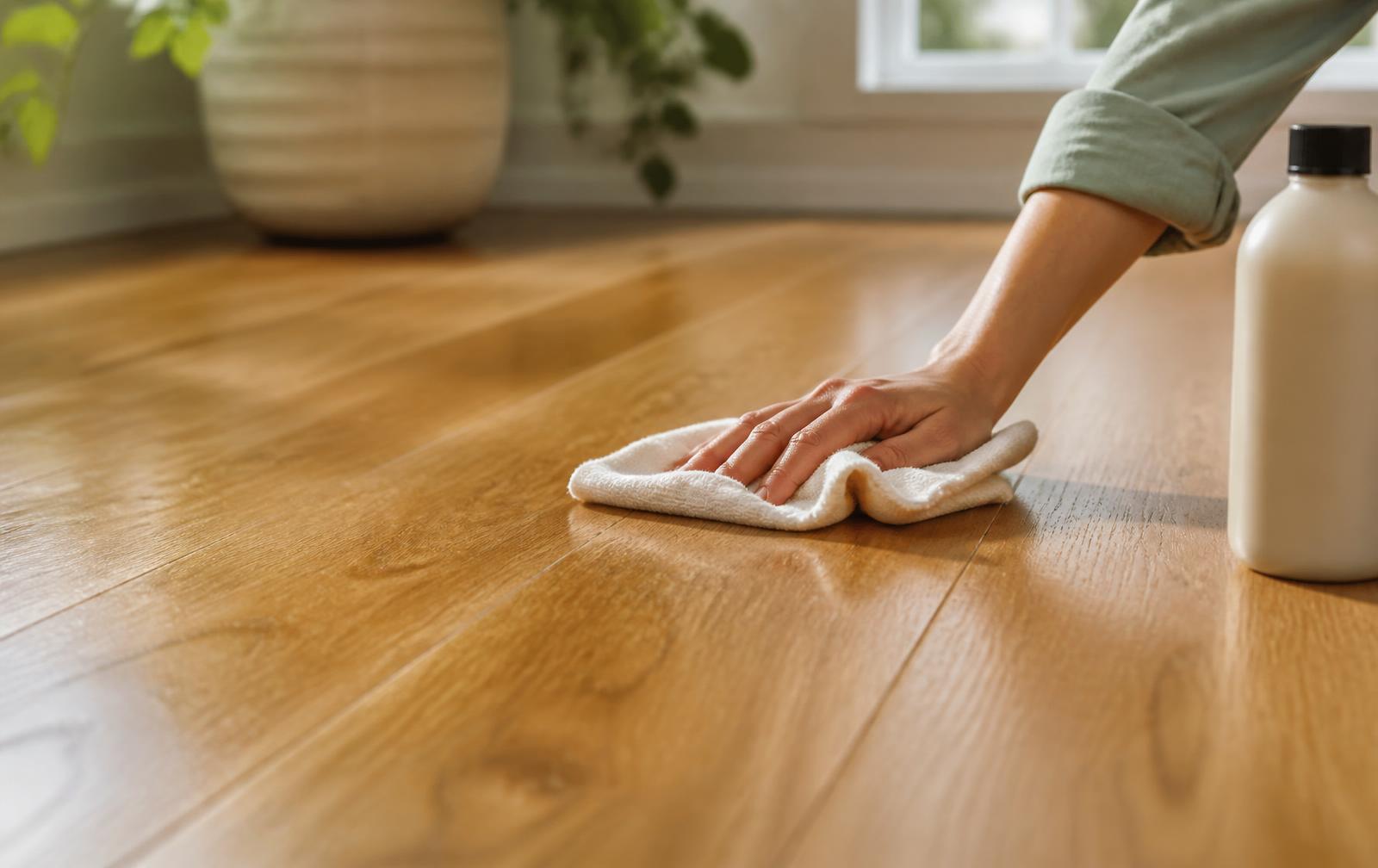
Grime is not the same thing as dirt. Dirt sits on top of a floor and comes up with a vacuum. Grime is what happens when dust, foot traffic, cooking residue, pet oils and mop water combine over months into a dull film that bonds to the finish. That is why a floor can be mopped every week and still feel slightly tacky underfoot.
The mistake most people make is escalating the chemical instead of changing the method. Stronger cleaner on a sealed floor usually strips finish, leaves residue, or both. Here is the approach we use in Metro Detroit homes, where road salt in winter and pollen in spring add two more layers to the problem.
Start by identifying what you are actually cleaning
Before any product touches a floor, establish two things: the material, and whether it has a surface finish. Water beading on the surface generally means an intact finish. Water darkening the surface means the finish is worn and moisture will penetrate — which changes everything about how much liquid you can use.
- Ceramic and porcelain tile: durable surface, but grout is porous and holds most of the grime.
- Luxury vinyl plank and sheet vinyl: tolerates water well, but shows residue from over-concentrated cleaner.
- Engineered wood: thin real-wood wear layer over plywood; low moisture only.
- Solid hardwood: never saturate; seams and end grain wick water and cup the boards.
- Natural stone: acid-sensitive; vinegar and citrus cleaners etch marble and travertine permanently.
Remove the dry layer first, completely
Wet cleaning before dry cleaning turns loose grit into slurry, and slurry is what scratches finishes. Vacuum with a hard-floor head or a HEPA vacuum, working with the plank direction, and pay attention to the perimeter: baseboard edges, under toe-kicks, and the transition strips at doorways collect the heaviest debris in the house.
Do the corners with a dry microfiber before you introduce any moisture. Corners are where old mop water dried and left the film you are now trying to remove.
Use dwell time instead of pressure
Grime releases with time far more reliably than with force. Apply a neutral-pH cleaner diluted correctly, let it sit for two to three minutes so it can soften the film, then agitate with a microfiber flat mop or, in the worst areas, a hand pad on your knees. That is the part most cleaning skips, and it is the part that actually works.
We scrub on hands and knees where that is what the floor needs. A mop moves water. A hand pad removes grime.
Tile and grout
Work the cleaner into the grout lines with a grout brush along the line, not across it. Rinse with clean water and change the water often — reusing gray water is the single most common reason tile looks hazy after cleaning.
Vinyl and engineered plank
Use a barely damp flat mop and two buckets: one for cleaner, one for rinse. Never let standing water sit along seams. Skip steam mops entirely on engineered plank — the heat and moisture together work through the seams and lift the wear layer.
Hardwood
Damp, never wet, and always a hardwood-specific neutral cleaner. Dry the surface behind you with a second microfiber. If the floor still looks dull once it is clean, the issue is worn finish, not dirt — and that calls for a recoat, not more cleaning.
Rinse, then dry — the step everyone skips
Any cleaner left behind becomes tomorrow's grime, because residue is tacky and grabs dust. Rinse with clean water on the floors that tolerate it, and dry-buff with microfiber. A properly rinsed floor feels smooth and slightly cool, not slick.
Keep it from coming back
- Put a hard-surface mat outside and an absorbent mat inside every entry — the majority of grime walks in.
- In winter, wipe salt off floors the same day; salt is abrasive and hygroscopic, so it keeps pulling moisture in.
- Dilute cleaner exactly as directed. Over-concentration is the leading cause of film.
- Change mop water when it turns gray, not when you finish.
- Deep clean floors once or twice a year even on a good maintenance routine.
When to bring in a professional
If a floor has years of buildup, if grout has gone several shades darker than it started, or if you are not sure what finish you have, professional deep cleaning is cheaper than refinishing. We test in an inconspicuous area, choose products to the material, and clean by hand where machines would do damage.
Our deep cleaning service includes detailed floor work along with baseboards, sills and the areas behind and under furniture — the places grime accumulates fastest.
Serving homes across Metro Detroit, including house cleaning in Troy. Call 248-547-4525 for a free quote.
Skip the scrubbing
We'll bring the supplies, the crew and thirty years of practice. Free quote, no obligation.